Wiltshire Housing Scandal - Tisbury is angry and still waiting for promised homes
Stone Circle Housing Scandal: Council Inquiry Launched but Tisbury is Still Angry
Investigation by Mary Myers, editor of TisTalk - Tisbury’s Community Podcast
24 March 2026
Abandoned Old Sports Centre housing site (photo Mary Myers)
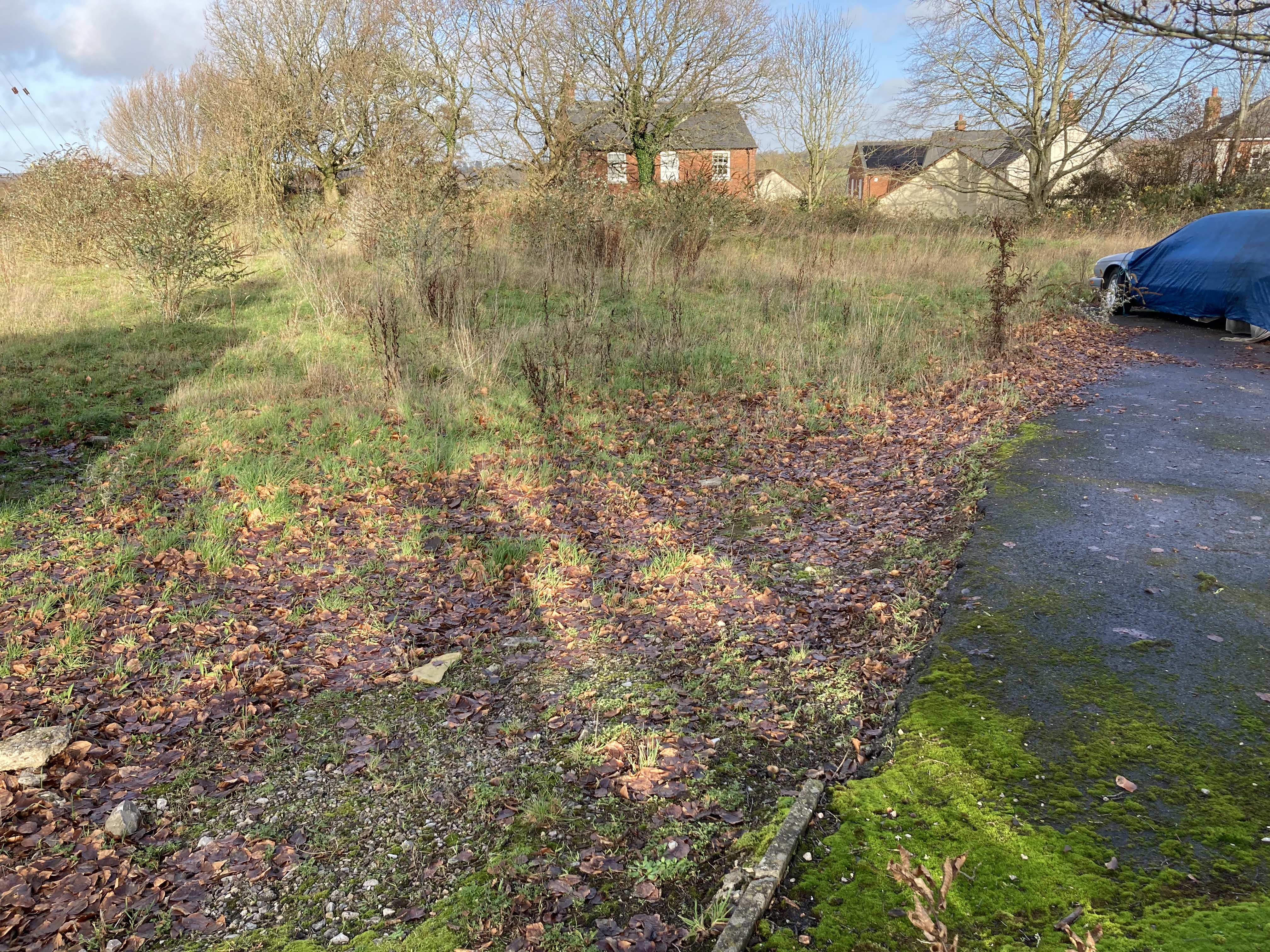
There is a forlorn patch of wasteland at the heart of the village of Tisbury, SW Wiltshire. Where 13 new homes for local people were once promised, there is now only rubble and creeping brambles at the Old Sports Centre site.
That emptiness on the ground is mirrored by a growing void in Wiltshire Council’s finances – a hole of £53m in debts racked up by Stone Circle, the Council’s wholly owned housing company.
“It’s a scandal,” says Simon Davison, chair of Tisbury Parish Council, pointing to both the abandoned site and the missing money. “Millions have been spent, and nothing has been built”.
Now, after months of mounting pressure, Wiltshire Council has announced an internal investigation into the dealings of Stone Circle Development Company (Wiltshire Times, 17th February) — the firm it set up but now admits is clearly failing. For the first time, there are signs of movement. But whether this inquiry will deliver real accountability remains an open question.
A Long-Awaited Inquiry — But Not Full Transparency
The inquiry marks a significant shift. Until recently, the Council had resisted calls for any formal investigation into Stone Circle’s collapse. There has also been a partial concession on secrecy. Some proceedings will now be held in public, including the presentation of the inquiry’s first report on the 25th of March.
However, transparency remains limited. Members of the Council’s internal Stone Circle Task Group are still prohibited from speaking to the press, and many discussions continue behind closed doors under “commercial confidentiality” rules.
For residents in Tisbury, this halfway openness is not enough. “They’re letting a bit of light in,” says Davison, “but not nearly enough to see what really went wrong.”
The Rise — and Fall — of Stone Circle
The story began in 2019, when Wiltshire Council created Stone Circle, a Local Housing Company (LHA) intended to deliver affordable homes across the county. The idea was simple: build on council-owned land, generate profit, and reinvest it into public services.
Instead, the activities of the Stone Circle Development Company, the firm’s house-building arm, are now being wound down, with only nine houses being built out of a promised total of 129 across Wiltshire, in Tisbury, Calne, Devizes, Marlborough and Royal Wootton Bassett. The nine in Calne (Priestly Grove) are only just nearing completion after local complaints, a court case and internal rows in the Council.
Stone Circle was set up as a wholly owned subsidiary of Wiltshire Council and comprises Stone Circle Development Company (for house-building) and Stone Circle Housing Company (to purchase residential properties for council tenants).
According to an internal report released by the Council’s Stone Circle Task Group, Stone Circle’s total debts are £53m of which its Development Company (SCDC) has debts of £3.9m to the Council, which it has no way of repaying. Of that, almost £300k was spent on the Tisbury Old Sport Centre site with zero result - no houses to show for it.
Following a change in political control of the Council in 2025, concerns about Stone Circle’s finances began to surface, with the Liberal Democrats demanding answers from Conservative former council Leader, Richard Clewer. “It was just a massive act of incompetence. Clewer provided no leadership. He just started running around blaming everybody else” said a source close to the Council.
“Stone Circle is a bloody disaster” continues our source, “It’s borrowed millions but no one has ever seen any management accounts. Stone Circle is now a zombie company carrying bad debt it will never be able to pay back.”
The Promise in Tisbury
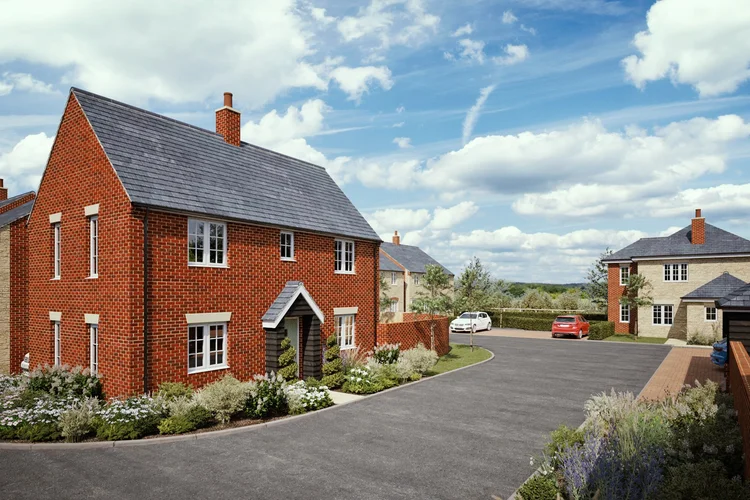
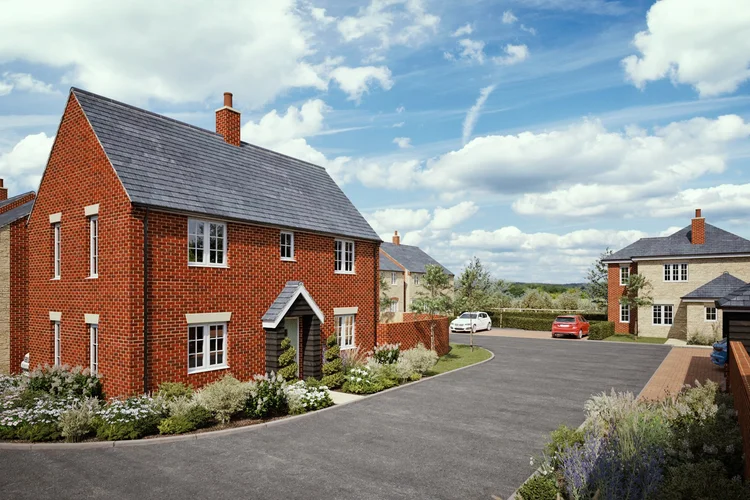
In Tisbury, the plan had inspired real hope. Architects’ drawings showed a small development of 13 two- and three-bedroom homes arranged around a tree-lined close. Local families would have priority, with a mix of affordable purchase and social rent.
The promised scheme at the Old Sports Centre site in Tisbury (photo Nadder Community Land Trust)
The Nadder Community Land Trust partnered with White Horse Housing Association and began preparing for delivery. Residents signed up. Expectations grew. Tisbury Parish Council backed the plan whole-heartedly.
For people like Laura Hill, who grew up in Tisbury but has been priced out, the development represented a chance to come home.
“I miss the fresh air, being able to see the horizon and the community I was incredibly privileged to grow up around,” she says. A young professional, working for a charity in London, she has been searching for a year but cannot find anywhere she can afford in Tisbury.
Silence and Secrecy
After early progress, the project stalled — and then disappeared into silence. Between 2022 and early 2025, repeated requests for updates were met with the same response: the information was “commercially sensitive” and protected by a confidentiality clause known as ‘Part 2’.
Tisbury Parish councillors say they were shut out entirely. “It became a bitter joke” Davison said, “we were being stonewalled by Stone Circle”.
Where Did the Money Go?
While no evidence of corruption has emerged, the spending raises serious questions.
Of Stone Circle Development Company’s overall debt of £3.9m, money spent so far in Tisbury is estimated at almost £300k. Of this, Stone Circle first spent £150k simply to buy the Old Sports Centre site. This involved a strange piece of circular accounting, in which the Council sold a public asset (the land) to its own company, Stone Circle, which then took out a soft loan from the Council to pay for it. Offices and a website were set up, an independent operations director and an office manager were remunerated. Feasibility studies, surveyors, architects, engineers, tender documents and legal fees were paid. Additional costs included planning permissions - another example of internal accounting gymnastics since it is the Council that confers these permissions, often involving expensive and lengthy bureaucratic procedures.
Then there was loan interest. “Delay is the worst thing about house building” says Dave Bradwell, an affordable housing advisor and Tisbury resident, “you spend hundreds of thousands on land, paying interest on that and that just starts eroding all of your profits.”
And all this time, the economic conditions for house-building were getting worse and worse. Bradwell remembers: “After COVID the supply chains all became jammed, everybody wanted everything suddenly. Costs of materials and labour…everything went up. We had massive inflation of about 20% in the house building industry while house prices stopped rising.”
Over time the debts mounted up and money just leached away. And no one was really noticing or in charge of the situation at Stone Circle.
While the Stone Circle website boasts “a skilled, agile team of housing and development professionals”, it is clear that very few people inside its development arm had any expertise in housing development. For instance, one of the directors appointed to the company was responsible for ‘Care and Wellbeing’ at the Council, another for ‘Governance’. Our source is scathing: “the skill set inside the company is about zero when it comes to building houses”.
How Local Housing Companies Were Supposed to Work
The concept behind Local Housing Companies like Stone Circle is that councils can build homes (usually ‘social’ or ‘affordable’ housing) on council-owned land, sell them, and retain the profits, rather than selling the land to private developers and losing that income. Although the council owns the company, the LHC is legally separate in an ‘arm’s length’ arrangement. These companies allow councils to bypass borrowing caps imposed by Whitehall and to cross-fund their other housing services using the profits they are intended to generate. The risk is that if anything goes wrong, councils are exposed and public money is at risk.
Between 2015 and 2019, LHCs proliferated, benefitting from what seemed to be ever-increasing house and land prices. By 2021, 83 percent of councils in the UK owned housing companies, according to a study by University College London.
But the bubble burst in the early 2020s, with Brexit, Covid, then the Ukraine war. All this sent building costs shooting up and house-prices flat-lining.
Elsewhere in England there have been several other failed schemes involving LHCs that have dragged councils into serious financial difficulties and badly let down local people. Last year Norwich City Council announced plans to liquidate a development company it had set up called Lion Homes, after years of losses, with the Council liable to lose up to £10m. In 2024, Slough Borough Council was accused of a conflict of interests over the large loans it has made (over £50m) to its housing company, James Elliman Homes, which was making heavy losses. In 2023, in Exeter, a subsidiary of its Council, Exeter City Living, failed completely, after incurring £4.5m in losses and leaving the Council with a debt of £10m.
“A Collective Nervous Breakdown”
Post-Covid, Stone Circle, like many other LHCs in the UK, was beset with rising costs, debts and lack of internal expertise: “a collective nervous breakdown,” as our source calls it.
While our source does not mince his words, the Council is more mealy-mouthed. However, it does admit to “actions and decisions within the Council’s control that have contributed to the minimal delivery of the development company” (according to an interim report by the Council’s own Task Group scrutinising Stone Circle to be released on 25th March).
Anger in Tisbury — and a Demand for Accountability
Back in Tisbury, the original Old Sports Centre site still lies empty and covered in brambles. Residents are clear about what they want: the houses that were promised at affordable prices — and answers about what went wrong.
The Council has now admitted that Stone Circle Development Company “has clearly failed – making a loss and only producing 9 houses [in Calne] to be sold on the open market”. But a mea culpa from the Council and an internal inquiry are not enough for Tisbury. Calne may eventually get its nine homes but Tisbury still has none, despite almost £300k of public money spent there.
“We just want the homes to be built — and for someone to take responsibility.” says Davison, Parish Council Chair. “I understand Stone Circle had to spend some money on legal fees etcetera but if it’s true that £300k has been frittered away, that’s a scandal. That’s almost twice our annual precept.” He adds: “With that money we could subsidise the pre-school and spend more on the youth club, maybe even solve Tisbury’s flooding problem”.
The launch of the Council’s inquiry is a step forward. The decision to hold some sessions in public is also progress. But with key discussions still happening behind closed doors — and council members restricted from speaking openly — doubts remain about how far the process will go. Meanwhile people in Tisbury – as well as in Marlborough, Devizes and Wooton Bassett – are still waiting for their new homes.
Richard Clewer (former Wiltshire Council Leader) has been contacted for comment.
Some names have been changed or anonymised.
Disclosure: Mary Myers is a local podcaster and producer of TisTalk and is married to Simon Davison, Chair of Tisbury Parish Council.

Meet Sarah Beddington, director of 'Fadia's Tree'